What is Voxel Toolkit?
Voxel Toolkit (often searched as Voxel Tookit or VX Toolkit) is a plugin that claims to extend the functionality of websites built with Voxel.
The plugin introduces various features intended to enhance the Voxel ecosystem. However, after reviewing its source code and feature structure, there is strong evidence suggesting that many of the features inside Voxel Toolkit were derived from EA4V, a plugin that has been independently developed over the past two years.
This article documents the concerns regarding code copying, feature replication, and the ethical implications surrounding Voxel Toolkit.
The Development of EA4V
EA4V is a plugin created specifically for the Voxel ecosystem. Over the past two years, its development has required extensive manual work, including:
Designing features from scratch
Writing and testing large amounts of custom code
Building modular systems and widgets
Structuring features to work seamlessly with Voxel
These features were not automatically generated or assembled from templates. They were manually implemented, tested, and refined over time.
Because of this, EA4V contains very specific architectural decisions and implementation patterns that are not easily reproduced by coincidence.
Voxel Toolkit and the Similarities to EA4V
Voxel Toolkit is developed by Donald McGuinn, a visible and influential member of the Voxel community.
When new features from Voxel Toolkit were first introduced publicly, they appeared to be normal additions to the ecosystem. In software development, it is common for developers to explore similar ideas.
Initially, there was no reason to assume anything unusual.
However, after gaining access to the source code of Voxel Toolkit, it became clear that multiple features shared striking structural similarities with EA4V.
These similarities include:
Identical feature structure
Nearly identical execution logic
Matching modular separation
The same widget grouping and architecture
In several cases, the code appears to be AI-rewritten versions of EA4V implementations, rather than independently developed solutions.
Features in Voxel Toolkit That Mirror EA4V
Multiple features inside Voxel Toolkit closely resemble the implementations originally developed in EA4V.
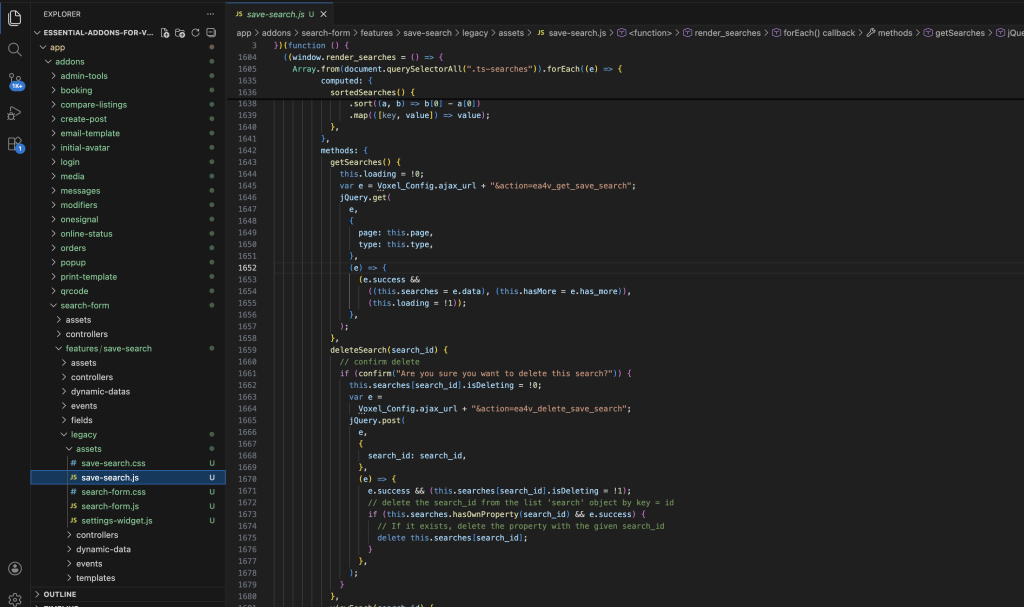
Save Search Feature
The Save Search feature in Voxel Toolkit closely mirrors the implementation used in EA4V.
Several similarities can be observed:
Nearly identical execution flow
The same approach for storing saved searches
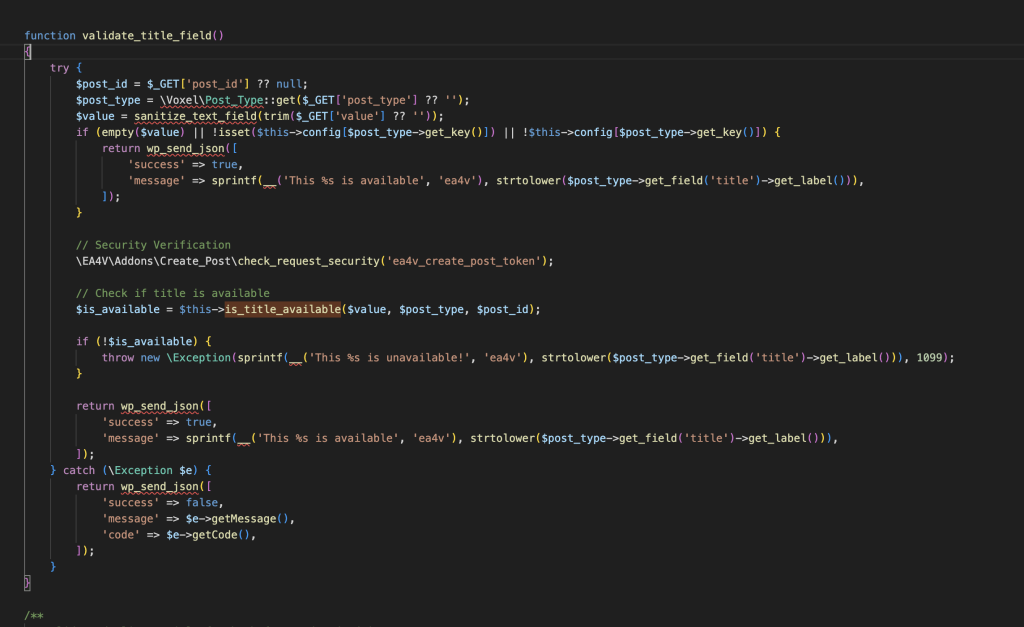
A dedicated function for handling duplicate detection
Although the code is not exactly identical, the logical structure and execution pattern are effectively the same.
In one case, the implementation even retained the same design decision of separating a method specifically responsible for detecting duplicate entries.
This strongly suggests that the feature was reproduced from EA4V rather than independently designed.
Schedule Feature
Another feature that appears to have been copied into Voxel Toolkit is the Schedule functionality, which was originally developed in EA4V.
Within EA4V, the schedule system was implemented as a standalone module with its own internal structure and logic. This modular design allowed the feature to operate independently while integrating with other EA4V components.
When the schedule feature later appeared in Voxel Toolkit, it followed a very similar architectural approach, both in functionality and in the way the system was structured.
The timing of its release, combined with the structural similarities, strongly suggests that the Schedule feature in Voxel Toolkit was derived from EA4V’s implementation rather than independently built from scratch.
Advanced Phone Input
The Advanced Phone Input feature in Voxel Toolkit also follows the same design approach used in EA4V.
Both implementations:
Use the intl-tel-input library
Apply similar field properties and configuration
Follow the same structural decisions for field handling
While this feature appears to have been rewritten more carefully, its design still reflects the same architecture used in EA4V.
This pattern again suggests AI-assisted reproduction of an existing implementation.
Schedule and Popup Modules
During earlier discussions, the Schedule and Popup functionalities were clearly recognized as independent EA4V modules.
Because these features were implemented as standalone components, they are structurally easier to extract and reuse.
Their modular design makes it possible to reproduce them without rebuilding the entire EA4V system.
This may explain why these particular features appeared first inside Voxel Toolkit.
Guest Post Feature
One notable feature that does not appear in Voxel Toolkit is the Guest Post system.
The reason is architectural.
In EA4V, the Guest Post feature is tightly integrated with the Create Post widget, which has been heavily modified to support additional functionality.
Because of this integration, the feature cannot simply be copied or extracted without:
duplicating the entire Create Post system
or heavily modifying its architecture
This structural limitation explains why the Guest Post feature has not been reproduced in Voxel Toolkit.
Attempt to Resolve the Issue Privately
Before speaking publicly about the issue, an attempt was made to resolve it privately.
A request was sent to Donald McGuinn, asking him to remove the copied features and code from Voxel Toolkit.
The intention was simple:
resolve the matter quietly
avoid unnecessary conflict
allow both projects to continue independently
Unfortunately, those requests were ignored.
Instead, the explanation given was that the code had been provided by a third party.
However, the structure of the copied features suggests direct knowledge of EA4V’s internal architecture, including:
which features are standalone modules
which features share widget components
how EA4V structures its internal logic
This level of detail is difficult to obtain without access to the original source code.
Why This Matters for the Voxel Community
Competition in software development is healthy and necessary.
Developers often learn from existing projects and build their own solutions inspired by them.
However, there is a clear difference between:
drawing inspiration from ideas
and
replicating someone else’s implementation without permission
The concerns surrounding Voxel Toolkit are not about similar ideas or overlapping concepts.
They are about replicating implementation details and feature architecture that were originally developed for EA4V.
If this type of behavior becomes normalized, it creates several long-term problems for the development community:
discouraging independent developers
reducing incentives to innovate
undermining trust within the ecosystem
The Role of AI in Code Rewriting
Modern AI tools can rewrite code while preserving its underlying logic.
While this may alter the syntax, it does not change the origin of the implementation.
If AI is used to rewrite someone else’s code without authorization, the resulting code is still derived from the original work.
Two years of manual development cannot be replaced simply by running code through an AI rewriting tool.
Final Thoughts on Voxel Toolkit
It is important to acknowledge that Voxel Toolkit does include some original work, and certain features are implemented well.
However, meaningful growth within a developer community must come from original development and fair collaboration, not from appropriating the work of others.
If developers begin copying features from each other without permission, the result will only be a collection of duplicated products with little real innovation.
For that reason, the concerns surrounding Voxel Toolkit deserve attention.
Ethics matter.
Original work matters.
And respecting the effort of other developers is essential for maintaining a healthy ecosystem.
Documented evidence of unauthorized code copying that undermines ethics, trust, and independent development.
Voxel Toolkit appears to include many pieces of code taken from EA4V.
I hesitated for a long time before speaking publicly about this. However, I believe there comes a point where remaining silent only enables unethical behavior—especially when it involves the unauthorized appropriation of code, intellectual property, and years of personal effort.
The individual involved is Donald McGuinn, a well-known and influential member of the community, including serving as a moderator within the Voxel community. Over the past two years, I have invested a significant amount of time, effort, and personal commitment into developing ea4v. During that time, I carefully designed, implemented, and refined its features through manual development.
Despite this, a substantial number of ea4v’s core features have appeared in Donald McGuinn’s plugin without my permission.These features were not independently re-implemented; instead, they closely replicate ea4v’s implementations, with AI-based code rewriting tools used to integrate them into a competing product.
Instead of putting in the work to build original functionality or collaborating in good faith, he chose to appropriate what are widely regarded as ea4v’s most valuable features—without consent, attribution, or discussion. This is not a matter of inspiration or shared ideas; it is a matter of unauthorized use.
Initially, when I saw announcements and posts about his “new” features in the community, I assumed it was normal. In software development, overlapping ideas are inevitable, and competition is healthy when each party independently builds their own solutions. I had no reason at that point to believe otherwise.
That assumption changed when I later gained access to the source code of his plugin. Upon reviewing it, I found clear and direct evidence that large portions of the code were copied from ea4v. The structure, logic, feature separation, and widget grouping mirrored ea4v exactly, with only superficial modifications generated by AI. This level of similarity is difficult to explain by coincidence or shared ideas alone.
I contacted Donald McGuinn privately and asked him to remove the copied code and features. I was willing to resolve the matter quietly and move on as if nothing had happened. Those requests were deliberately ignored. Instead, he claimed that the code had been provided to him by a third party.
That explanation is inconsistent with the technical evidence. The copied code demonstrates detailed internal knowledge of ea4v—specifically, which features are implemented as standalone components and which are combined into shared widgets. This is knowledge only the original author or someone directly copying the source code would have.
While ignoring my requests, he continued to present himself publicly as a helpful and respectable figure within the community. However, ethical conduct in software development is not defined by public image, but by respect for other developers’ work. AI-assisted rewriting cannot replace or reflect the reality of manually writing, testing, and refining code line by line over the course of two years—work I am still continuing as I prepare the next major version of ea4v.
To be clear: using open-source code, learning from existing projects, and drawing inspiration from ideas are all normal and healthy practices in software development. I have no issue with developers studying ea4v for inspiration, or even applying similar concepts in entirely different ecosystems or communities.
The issue here is fundamentally ethical. Donald McGuinn is developing a directly competing product within the same Voxel community while appropriating ea4v’s code and features without authorization. This behavior goes beyond competition—it undermines trust, discourages independent development, and devalues the effort of those who build things the right way.
If this kind of conduct continues to be ignored or celebrated, it raises serious concerns about the future of fair and ethical development within the community. Personally, it has forced me to question whether I can continue investing my time, energy, and motivation into building plugins and new features—while unauthorized copies of my work receive attention and praise.
This statement is not made lightly. It is made because ethics matter, effort matters, and silent acceptance of this behavior only guarantees that it will continue.
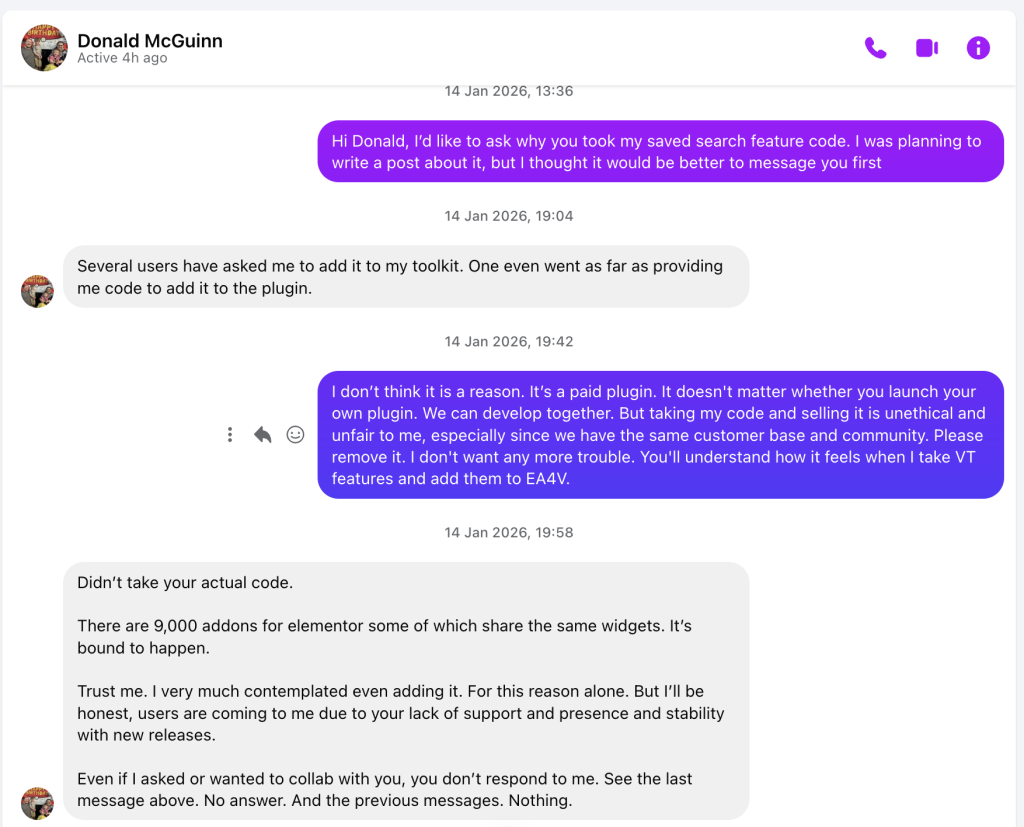
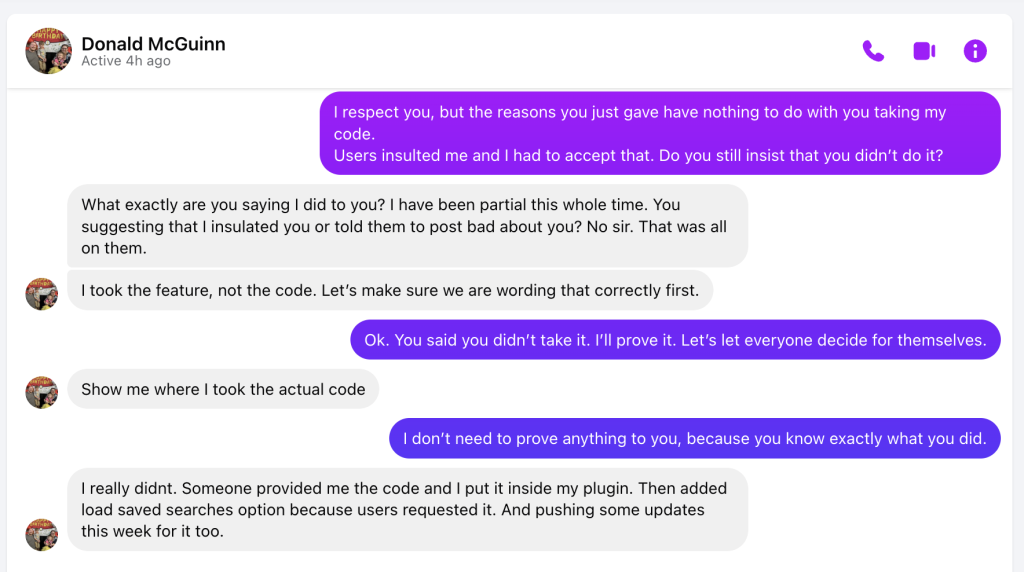
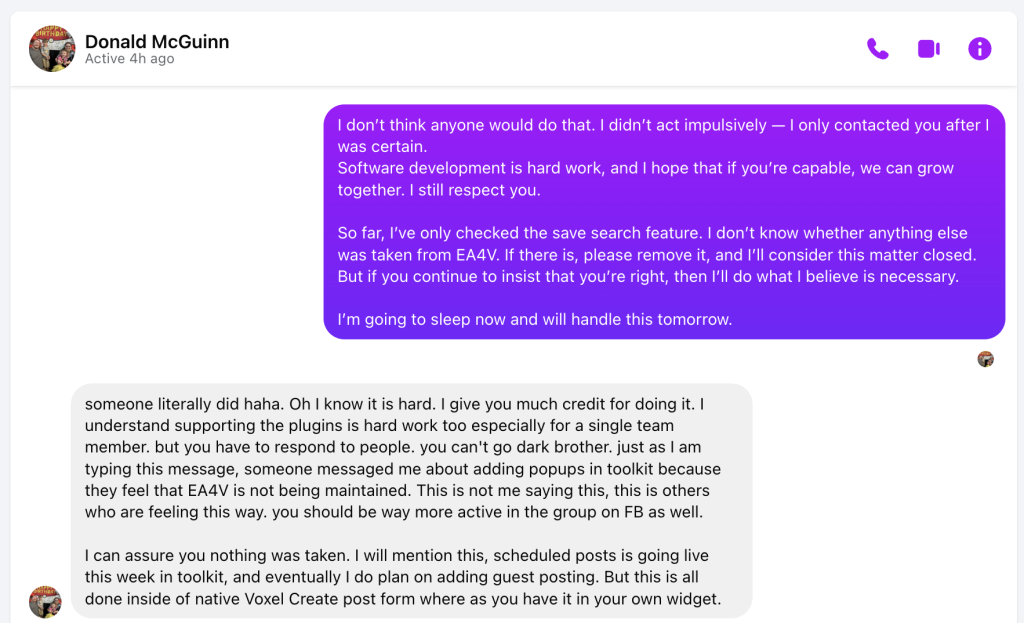
Based on our chat, the ea4v features that were explicitly referenced and discussed as potential targets are the schedule and popup functionalities. These are implemented as discrete, standalone modules within ea4v, which makes them structurally easier to extract and reuse in isolation.
By comparison, the guest post functionality is architecturally bound to ea4v’s modified Create Post widget. It cannot be taken in isolation without either duplicating the entire Create Post system or investing additional effort to separate it, which explains why it has not been implemented.
This statement is also relevant as evidence, since it shows that he was clearly aware that the guest post feature is embedded within ea4v’s Create Post implementation.
Save search feature
ea4v
vx toolkit
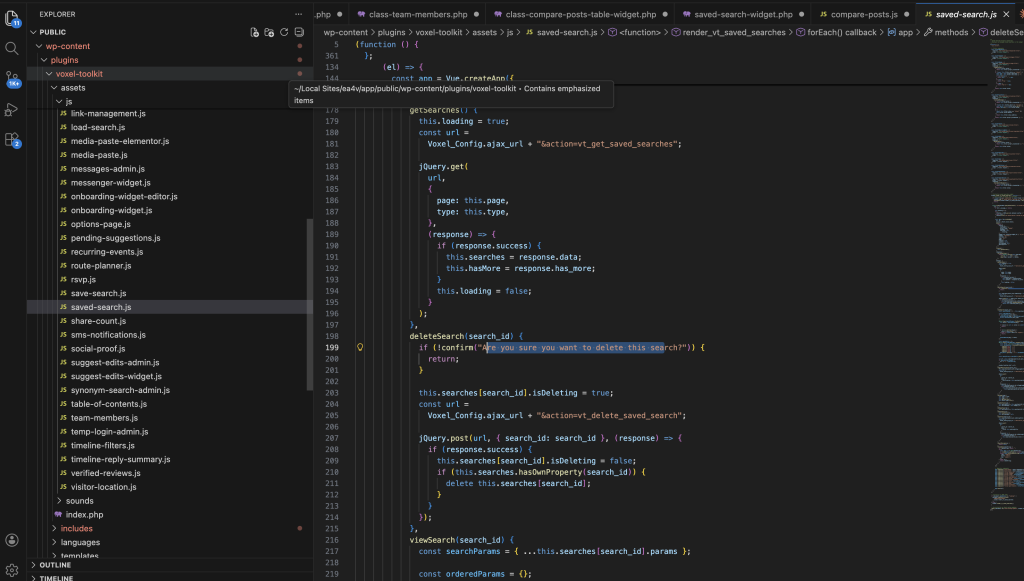
Perhaps in the rush to gather and absorb multiple features, the Save Search functionality was replicated in a manner that closely mirrors the original implementation
duplicate title
ea4v
vx tk
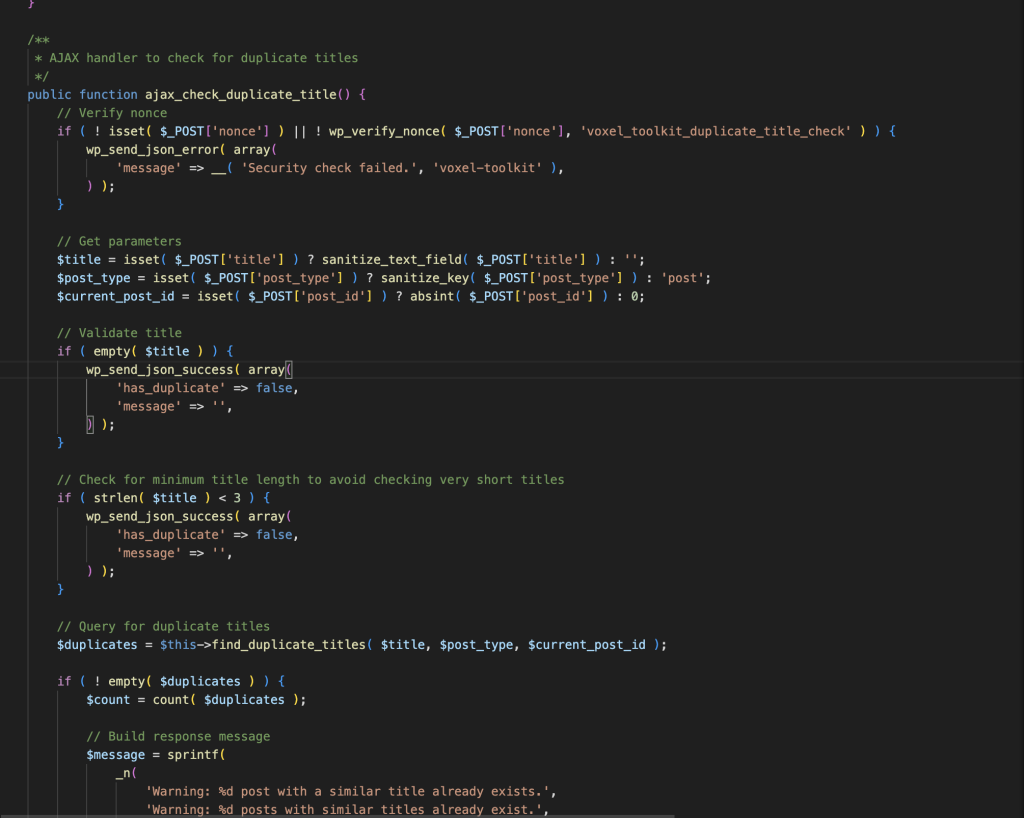
With the Save Search feature, perhaps due to the rush to release, he made the mistake of not thoroughly revising the source code. In this case, the code is not 100% identical, but the execution flow is functionally identical, including the decision to separate a dedicated method for handling duplicate checks
Advanced Phone Input
Although this feature was implemented more carefully, its design closely follows ea4v’s phone field. It relies on the same intl-tel-input library, comparable field properties, and identical identical architectural decisions, strongly suggesting AI-assisted reproduction rather than independent implementation.
I will stop here. I am not continuing this investigation further, simply because I do not have the time to do so.
I acknowledge that he has developed new features for Voxel, and some of those features are genuinely well done. Mutual growth and collaboration are always what I hope for within a development community.
However, that growth must not come at the cost of appropriating other people’s work. This behavior should not continue. If I were to start copying all of VT’s features and putting them into ea4v, it would do nothing but create yet another unethical actor—adding no value and offering no benefit to the community or society as a whole.